Energy & Infrastructure
Fluid machinery, piping, damage, and maintenance.
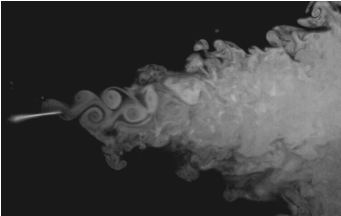
RESEARCH
Across diverse fields, our common approach is to visualize phenomena, understand them through mechanics, and connect that insight to society through design and prototyping.
RESEARCH FRAMEWORK
We combine experiments, visualization, theory, computation, and design—from understanding complex phenomena to proposing new systems.
01 — RESEARCH AREA
We investigate interactions among fluids, structures, bubbles, and waves across multiple temporal and spatial scales.
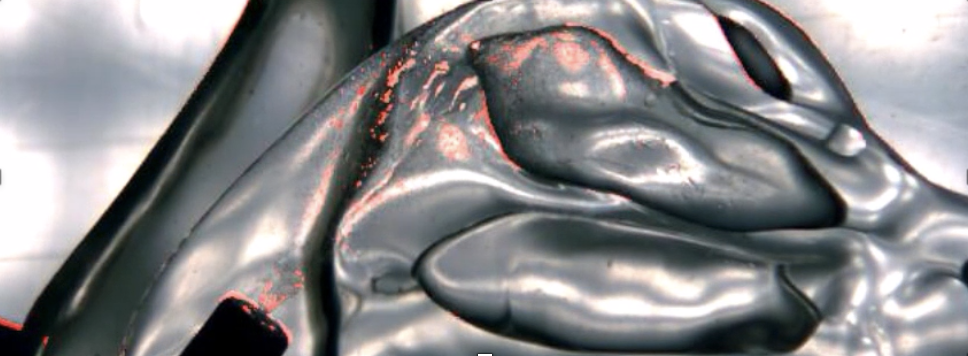
High-speed visualization of bubble collapse
In cavitation, water hammer, fluid–structure interaction, and ultrasonics, pressure waves, structural response, bubble generation and collapse, and interfacial phenomena occur simultaneously. We combine visualization, measurement, and numerical analysis to reveal the governing mechanisms and their effects on structures.
02 — RESEARCH AREA
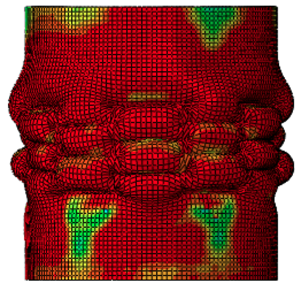
We observe damage inside materials, at surfaces, and across interfaces to develop structures and evaluation methods that withstand fracture and impact.
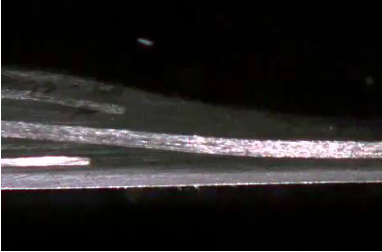
Material damage appears as local deformation, interfacial delamination, crack growth, and impact response. By linking experimental observations with numerical analysis, we study damage mechanisms, evaluation metrics, and their translation into structural design.
03 — RESEARCH AREA
We address challenges involving the human body, perception, behavior, and experience through both mechanics and engineering design.
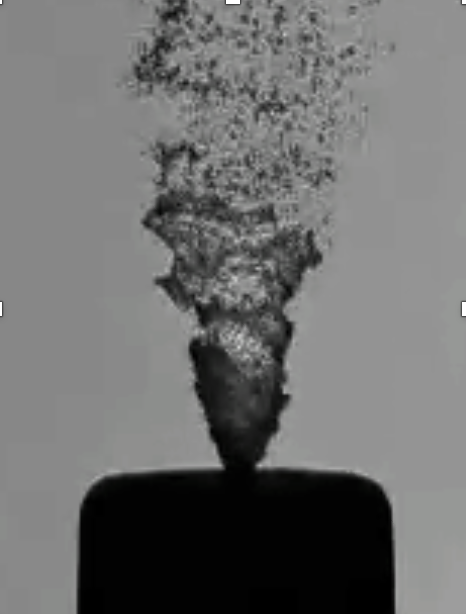
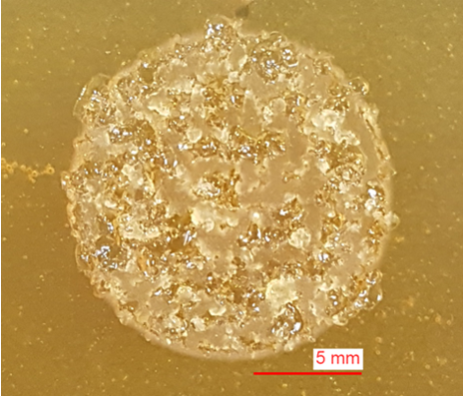
Visualization of nasal spray atomization
For medical devices and everyday products, value depends not only on physical performance but also on safety, usability, perception, and user experience. We visualize and evaluate spraying, contact, deformation, and fracture to propose devices and methods that create better experiences.
04 — RESEARCH AREA
We connect scientific understanding to design, simulation, prototyping, experimentation, and iterative improvement to accelerate the realization of ideas.

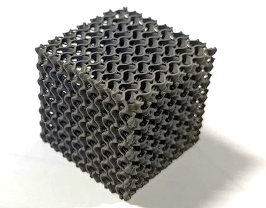
Smart Prototyping is our signature approach integrating visualization, mechanics, simulation, AI, prototyping, and experimentation. By moving between digital and physical forms and testing hypotheses early, we accelerate both research and value creation.
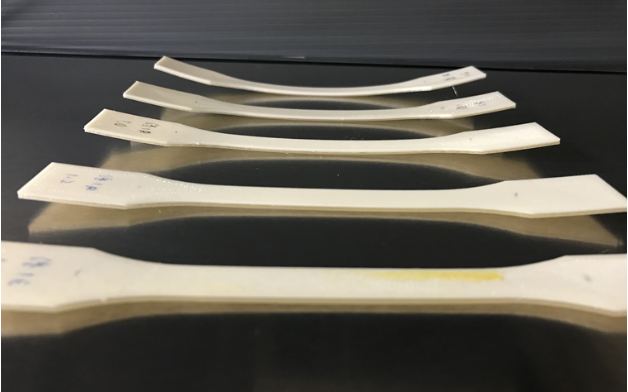
HOW WE WORK
We do not rely on a single method; instead, we compare phenomena, models, prototypes, and evaluation results.
Capture fast, microscopic, and complex phenomena.
Quantify pressure, displacement, velocity, force, and material response.
Identify the physics and mechanics governing the phenomenon.
Reproduce hypotheses and explore conditions and structures.
Turn ideas into testable forms.
Learn from results and improve both design and research methods.
FIELDS OF IMPACT
Our work is not limited to a single product domain; we address challenges where complex physical phenomena intersect with human experience.
Fluid machinery, piping, damage, and maintenance.
Medical devices, surgical support, and drug delivery.
Impact, composites, aerodynamics, and structural design.
Additive manufacturing, prototyping, material evaluation, and AI.
Contact, perception, usability, and value design.
EXPLORE FURTHER
For inquiries about research, collaboration, or graduate study, please use the contact information in the official university profile. Please refer to the official university pages for publications, achievements, and affiliation details.